Marketing Built for How Industrial Buyers Actually Make Decisions
Industrial buying cycles rarely begin with a sales call.
Buyers research vendors, compare past work, and gather technical information long before they speak with a salesperson. In fact, research shows that B2B buyers complete around 70% of their purchasing journey independently before engaging vendors.
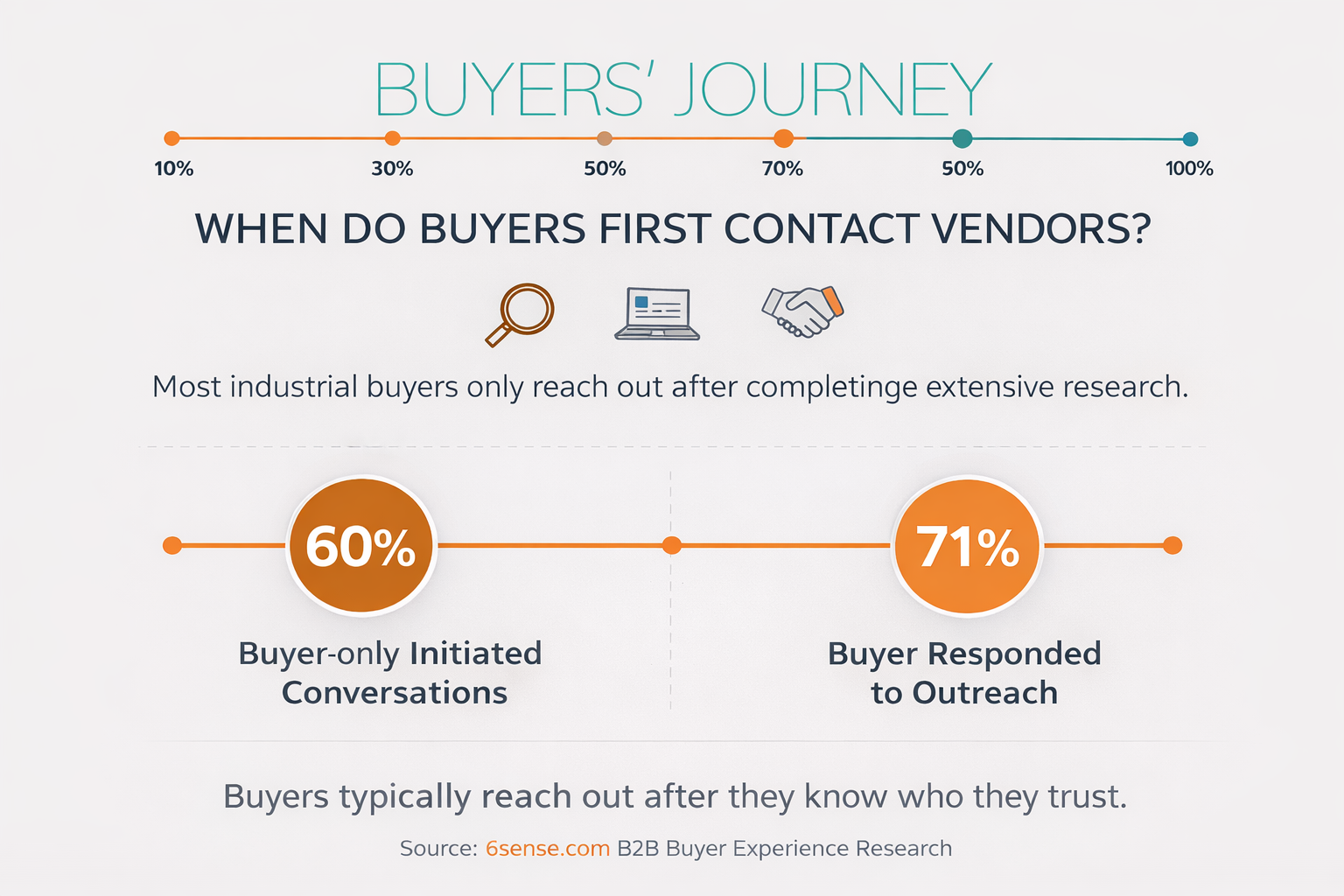
By the time a conversation starts, many decisions have already taken shape.
That means marketing has an opportunity to influence how buyers evaluate vendors well before proposals or pricing discussions begin.
Across my career, supporting organizations such as Black & Veatch, DH Pace, Hallcon Transportation, and BVA Hydraulics, I have focused on helping companies make their expertise visible during the early research phase.
When SEO, CRM systems, and sales enablement materials are aligned, buyers are able to discover credible information earlier, and sales conversations begin from a much stronger position.
Why Many Industrial Marketing Efforts Fail to Support Sales
Buyers cannot easily find the right information
If technical expertise and project experience are not visible through search, buyers may never encounter the company during early research. Even highly capable firms can remain invisible if their digital presence is difficult to discover.
2. Marketing Systems Operate Separately
Websites, CRM systems, and marketing programs often function independently. Without integration between lead generation, CRM tracking, and sales outreach, valuable opportunities may never reach the sales team.
3. Messaging Exists Without Evidence
Industrial buyers want proof. Case studies, project documentation, and technical insight carry far more weight than general marketing language.
4. Awareness Without Conversion
Traffic alone does not produce revenue. Without clear follow-up processes and CRM workflows, early interest never becomes a pipeline.
My Approach:
Align SEO, Content, and CRM With the Sales Process
Industrial buyers want to evaluate vendors independently before engaging with sales.
Marketing should make that evaluation easier.
My approach focuses on connecting several elements:
• Search visibility that helps buyers discover expertise early
• Technical content and case studies that demonstrate capability
• CRM and marketing automation that nurture leads and partners
• Sales materials that support technical conversations
When these systems work together, marketing becomes part of the sales process rather than a separate activity.
Examples From My Experience




Black & Veatch — Digital Visibility for Energy Expertise
While managing digital programs at Black & Veatch, I supported enterprise communications during the company’s transition toward renewable energy and advanced power solutions.
The work included coordinating messaging across 8 business unit showcase pages, supporting executive LinkedIn communication, and promoting technical thought leadership through digital channels.
The goal was to ensure energy decision-makers researching infrastructure partners could easily find credible perspectives on decarbonization and advanced energy.
DH Pace — SEO and Digital Content Across Local Markets
At DH Pace, a national construction services organization, I supported digital marketing across more than 35 regional websites.
My work included developing search-optimized content and coordinating messaging across 75 social media accounts nationwide. These efforts helped ensure buyers researching building services in local markets could find relevant expertise and understand the scope of the company’s capabilities.
Hallcon Transportation — Supporting Large Infrastructure Contracts
At Hallcon Transportation, I worked with leadership and project teams on marketing and proposal materials used during major contract pursuits.
My responsibilities included developing case studies and organizing project documentation used in RFQ and RFP submissions. These materials helped clients evaluate operational capability and past performance during the procurement process.
SFA Companies / BVA Hydraulics — CRM and Industrial Marketing Alignment
In my recent role as Marketing Director at SFA Companies, supporting the BVA Hydraulics brand, I shifted marketing efforts toward a stronger B2B strategy focused on distributors and industrial buyers.
Key initiatives included:
• Implementing CRM-driven partner nurture workflows
• Developing digital and sales support materials for industrial products
• Creating content that explains product applications for technical buyers
These efforts contributed to 10 percent year-over-year sales growth in a competitive manufacturing market.
What Effective Industrial Marketing Looks Like
Marketing that truly supports sales focuses on three priorities.
Buyers Can Discover Expertise Early
Strong SEO and clear digital positioning ensure buyers encounter your expertise during early research.
Evidence Supports the Message
Case studies, project documentation, and technical insight provide the credibility buyers expect.
Systems Support Follow-Up
CRM integration and marketing automation ensure early interest becomes real sales conversations.
The Result
When SEO, content, and CRM systems work together, marketing does more than generate visibility.
It helps buyers discover expertise earlier.
It provides the proof needed to evaluate capability.
And it supports sales conversations with credibility already established.
In industrial markets, where purchasing decisions involve risk, proof, and accessibility matter.
Marketing that delivers both becomes a measurable contributor to revenue.